30 June, 2011

Why I Race and Why You Should, Too

A guest post by Robert George

“Most cyclist don't race...” The unofficial slogan of Velo Orange, and one of our founding principles. It still holds true today that most cyclists don't race, but some of us do. One of the great things about a company like Velo Orange is that it attracts a talented and passionate staff that all love cycling. Even so, everyone is different and we all get something different from cycling. My main focus is racing and I see it both as a way to compete in the sport I love and an outlet to relieve stress and put myself to the test.

I started racing in 2003 when I learned about about local mountain bike races from a friend. I stripped the failing derailleurs off of my Schwinn mountain bike, turned it into a singlespeed and raced a local Wednesday night race. Instantly I was hooked! Racing let me push myself until I thought my heart might leap out of my chest and my legs might give out and yet still had a great time doing it. It was suffering like I had never experienced; it was fantastic.

If racing is so much suffering and so at odds with the stated aim of Velo Orange, then why race? For me, it's the excitement and adrenaline of competition. Toeing the start line with butterflies in your stomach before riding all-out as hard as you can for an hour (or two, or four, or many more) is about as fun as it can get. Racing pushes me to levels I didn't know I could go; legs and lungs burning I forget all the stress in my life and think only about how this is the hardest race yet and how I can push just a little bit harder to overtake the next rider. Today I race road, mountain and cyclocross to keep the calendar full for most of the year.

Of course that's my answer; when the question is “Why race?” the answer is different for everyone. As a cyclist, racing can give you a new channel to explore the sport you love. Racing is also a great way to get out and meet other cyclists and find new routes and places to ride. If you are like me, racing will also push you harder and give you more motivation to stay in shape and work on your fitness year round.

If you want to give racing a try there are lots of different disciplines within the sport. Probably best known are mountain and road racing, but you shouldn't overlook cyclocross or track racing. Once you dive into the world of racing you will find that there are additional subcategories within each discipline. Here is a quick rundown:

Mountain biking (MTB): Popular, fun and technically challenging, MTB encompasses lots of different types of riding and racing including the cross country, various downhill disciplines and the currently popular endurance events.

Road racing: If you like skinny tires and high speeds then road racing is for you. Seemingly less technical than mountain biking, it really isn't. Road racing isn't just raw speed either; strategy and tactics are the name of the game, having a great team to race with helps a lot too.

Cyclocross: My personal favorite, cyclocross combines many of the best aspects of road and mountain biking into a fun and spectator friendly sport. Cyclocross is characterized by mud, nasty fall weather and truly enthusiastic fans ringing cowbells. With such a welcoming crowd 'cross is a great place to start racing, not to mention that crashing in the mud doesn't hurt as much as asphalt.

Track: The discipline I have the least personal experience with is track racing. This is due to sad fact that there are not many velodromes in the United States, which is a shame as track racing is fast and and fun for both participants and spectators. A variety of race formats keep things interesting as well, from short sprints to six day races.

The majority of road, cyclocross and track racing in the United States is governed by the sanctioning body USA Cycling, with other similar organizations in other countries. USA Cycling handles the rulebook, race officials, rankings, licensing and other details. If you want to race road, 'cross or track in the United States it will benefit you to get a license from the USAC. For an extra fee many events allow one day license purchases, but registration for popular events often fills before race day. Additionally, you don't have sign up for many races in a season before you break even on the $60 annual license fee from USAC, and you won't be able to advance through race categories without a license.

One important exception for race licensing is mountain biking. Professional mountain bike racing in the United States is governed by NORBA (National Off-Road Bicycle Association, a division of USAC) and requires a NORBA license. However, here in the Mid-Atlantic nearly all mountain bike races are unsanctioned grassroots events and you will have a difficult time finding NORBA events. Opinions may vary, but for mountain biking I prefer small, fun grassroots events and I don't miss the licensing requirements. The relationship between NORBA and mountain bike racing may vary by region as well.

If you decide you want to get your feet wet and race, there are lots of places to find out about races, but I would start with bikereg.com. Bikereg is by far the easiest way to find and register for all types of cycling events. If you need further race recommendations you can ask your local bike shop, local teams and any friends that race.

Velo Orange is not about racing so it may seem like an oxymoron for us to post about racing and why you should do it, but we don't think so. Racing certainly isn't for everyone, but it isn't mutually exclusive to the relaxed touring, rando and city riding we stand for. I'm thrilled to race one weekend and go bike camping the next. Two VO staff members race and it is simply another aspect of the sport of cycling that we love. If you love something then why not involve yourself in as many ways as possible, have some fun, and maybe meet some new friends? That is why we cycle: fun and friends.

Photo 1 by JoeMallis.com, photo 2 by Jen Linko

24 June, 2011

Frame Plans

I've been pondering the Rando frame and its possible successor. Before I go on, let me say that we still have plenty of Rando frames available and plan to continue to offer them. They get great reviews and the folks who bought them seem to love them. Check out the nice article on the Chasing Mailboxes blog about Mark B's VO rando. Nonetheless, after the new VO 650b Polyvalent (due in late summer) and the 700c Polyvalent tourer (due in early 2012) we'll need a new frame project to work on.

The next model may be a TIG welded VO Pass Hunter based on my own bike. Here are a few of my thoughts and ideas:

  • It will be a low-trail design with geometry much like a Rando's.
  • Ideal tire size would be 32mm, though 35mm would fit.
  • It will have canti brakes since a pass hunter is meant to be ridden up and down mountains. 
  • Being TIG welded, it'll be a little lighter than the Rando. As much as I love lugs it's hard to get over the fact that they add $200-$400 to the price of a frame while offering only aesthetic benefits.
  • We may use a lighter, and more expensive, tube set. This is a bit of a trade-off since thinner wall tubing is also easier to dent. We've even talked about using Reynolds 953. Still not sure if this is really worthwhile.
  • Vertical dropouts, of course.

20 June, 2011

A Nice Porteur


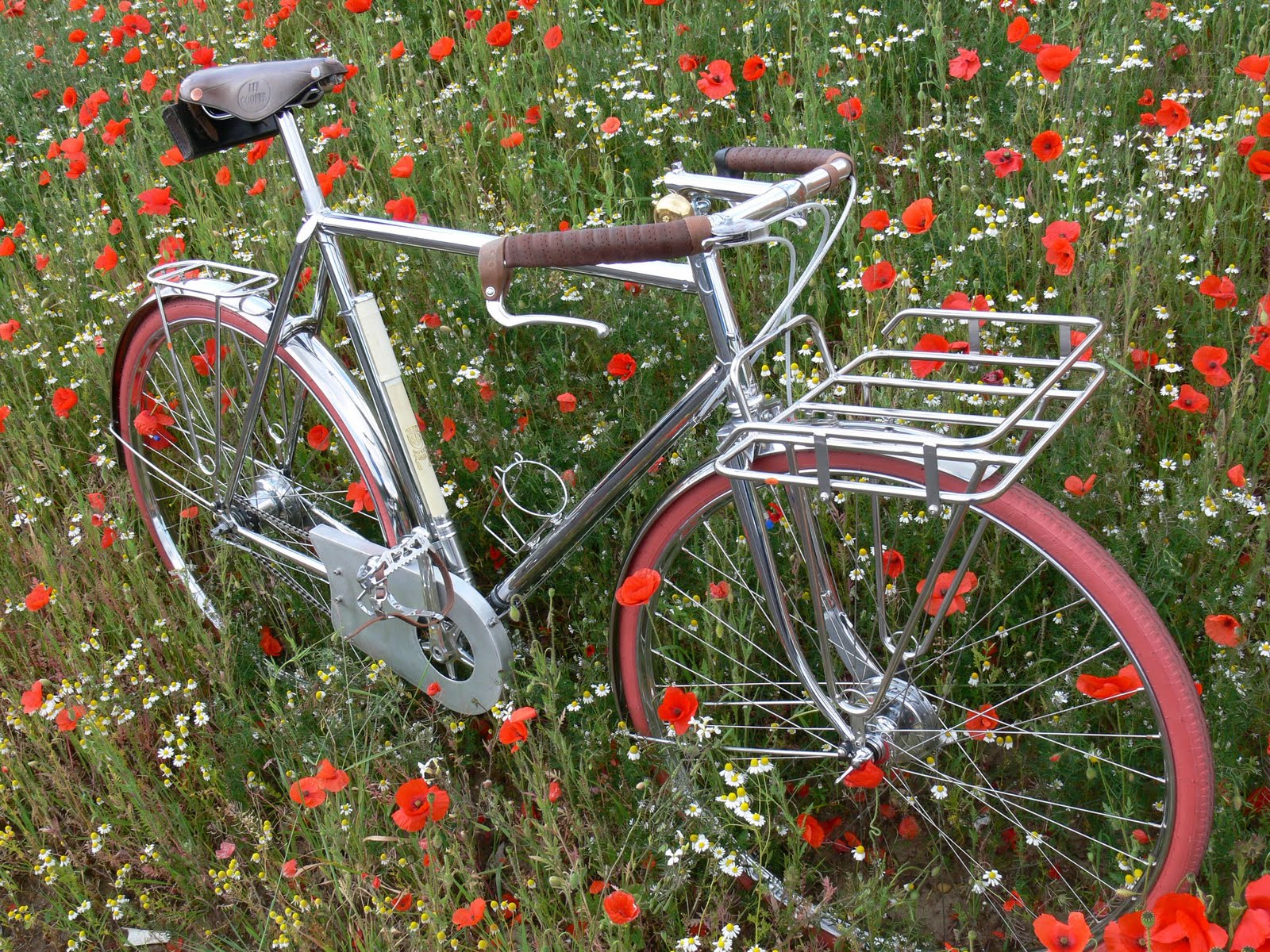
This lovely Lee Cooper Porteur by Alex Hatfield won the Best Utility Bike category at the Bespoke Bristol show. Note all the VO parts, racks, bar, chain case, fenders, etc. Alex says, "Without Velo Orange it would have been a very difficult project to complete". The frame is designed to carry serious loads and handle properly while doing so.

15 June, 2011

Bespoked Bristol, The UK Handbuilt & Boutique Bicycle Show

Jamie of Freshtripe (our UK distributor) sent along some photos and links from the Bespoked Bristol, The UK Handbuilt & Boutique Bicycle Show. It looked to be a great show with some amazing bikes.
 Jamie writes:
The show was a great success, I think everybody including the organisers were taken aback by the turnout - we were swamped all weekend with customers (new and old) who were pleased to be able to meet us and get their hands on the VO parts up close. The Rando build went down a storm and was great at illustrating the range of parts, a few people declared it their favourite bike of the show, quite a compliment given the competition! The stand was also a favourite as we'd gone for a traditional butchers theme (playing on the Freshtripe name) with the parts tagged and layed out on platters..

Also you'll be pleased to know that the Best Bicycle of Show by Donhou Bicycles (called Pimento Stuffed) featured VO items such as mudguards, seatpost etc and the Best Utility bike by Lee Cooper/Alex Hatfield Concepts (called Porteur) also featured some choice VO items such as the Porteur Rack, chainguard, muduards, bottle cages etc (as did his other creations) - both supplied by us. Paulus Quiros Desins wowed everybody as newcomers to the frame building fraternity with a stunning set of builds including a tandem, singlespeed and a polished Reynolds 853 road build which between them sported leather bar covers, bottle cages, mudguards, stems, seatposts, handlebars, GC Cantis etc also supplied by us - a situation which helped all involved to direct people to each others stands to see examples of the VO parts either available to buy or fitted to a bicycle..

 If you're "across the pond" and need VO parts check out their site. They also distribute our part to other UK shops.

Here are  links to more photos:

http://www.hardtailnation.co.uk/2011/06/bespokedbristol-handmade-bike-show-2011/

http://www.thefootdown.co.uk/2011/06/12/bespoked-bristol-2011-photos/

http://www.retrobike.co.uk/forum/viewtopic.php?t=153362

http://www.bikeradar.com/gallery/article/bespoked-bristol-handmade-bike-show-massive-gallery-30538 

https://www.dropbox.com/gallery/29754457/2/BESPOKED%20BRISTOL%20Photos/LO%20RES?h=1bafaf

13 June, 2011

Alec's 1200k Ride

We want to congratulate Alec Burney who just completed the 1200 kilometer Shenandoah Brevet in a time of 84-hours and 50-minutes.

Not only did Alec complete the very mountainous ride and endure searing heat and torrential thunderstorms, but he rode the 60-miles to the start. Then he rode 60-miles back and, instead of going home, he came directly to the VO office to catch up on e-mails and answer tech questions!

By the way, he rode his VO Rando with Grand Gru 50.4bcd cranks, dynamo, Ti Saddle, PBP rims, prototype rack, etc.

09 June, 2011

Grand Cru Touring Hub are Here

The first batch of production Grand Cru Touring Hubs just arrived. Even though we examined and tested six prototypes, I'm always nervous about new products until I see the ones that are production made. So it's really great to see that the quality and finish is every bit as nice as the hand-assembled prototypes.
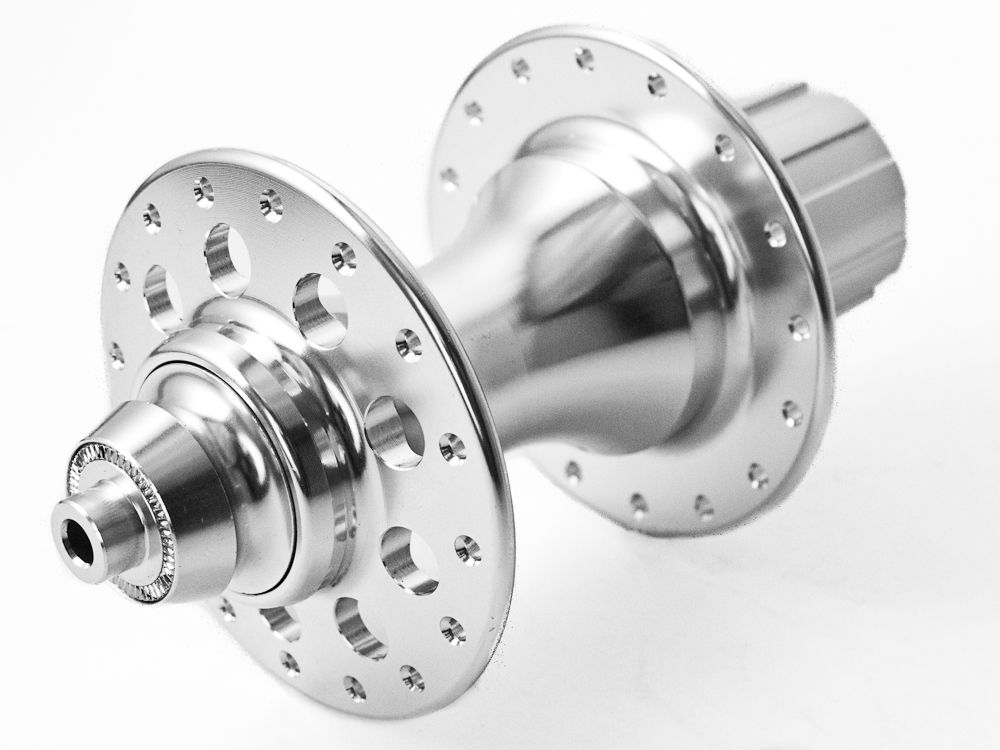
The Grand Cru Touring Hub is designed for long distance riding and heavy loads. The sturdy hub shell is our own design. Being a large-flange hub there is room for four identical and rather large cartridge bearings. We use very high quality Japanese bearings. The bearings we chose are a common size and relatively easy to replace if they ever do wear out.

The axle is hollow and oversized. The free-hub body is steel for durability. There are three pawls with sturdy springs. The touring hubs accept 8/9/10 speed Shimano-type cassettes. You can fit a 7 speed cassette by adding a 4.5mm spacer. The VO enclosed-cam quick release skewer is included.

They are available in 130mm and 135mm spacing in 32h and 36h drilling. Matching front hubs are also available.

The video we posted a few weeks ago showing how to disassemble the Grand Cru hub for field servicing without tools can be found here.
They have been selling very well since we added them to the site late yesterday. I expect we'll run out before the second batch arrives later this summer. As soon as we have sufficient stock we'll have some built up with Raid rims and with Diagonale rims. The very first set of 36h is going on my bike.

08 June, 2011

More Staff Bikes

You may remember that back in February we posted photos of some of our staff's personal bikes. Here are a few more:

 Katie's new Univega commuter.
Nick's Schwinn High Sierra touring bike as ridden from Tacoma to Baja  to Central Mexico to New Mexico and so on.
Chris's VO Pass Hunter (prototype). This will probably be production bike eventually.
Annette's Gitane mixte city bike with 7-speed hub.
Christopher's Di Blasi R6 folding bike, purchased and ridden when he was living in Amsterdam.
Annette's custom VO rando.
Christoper's Peugeot all-arounder.

01 June, 2011

50.4bcd Rings and Other New Bits

What a busy week we're having, not much time to write blog posts. But I did want to mention a few items that just arrived.

The 50.4bcd inner rings and 50.4bcd outer rings are here. We also have single speed rings. They are fully compatible with TA, Sugino, Nervar, Grand Cru, Stronglight, and most other 50.4bcd cranks and they work with 6-10 speed chains.

The VO compact double crank is back in stock. But a production problem has delayed the next shipment of 50.4bcd Grand Cru cranks by a couple of months.

We have a few other small new bits: VO pedal replacement bearings, Grand Cru headset replacement bearings, and alloy crank dust caps. VO chain ring guards and fixing hardware will be on the site soon.

28 May, 2011

VO Closed Monday, Memorial Day

We'll be closed on Monday, Memorial day. Our hard-working staff sure could use the extra day off; this past week has been brutally busy. We'll try to get all the orders that come in over the weekend out on Tuesday. We hope you enjoy your long weekend.

BTW, if your mean boss doesn't give you holidays off, you might drop us an e-mail. We're looking for another order packer/prototype tester/warehouse worker. It's an entry level job, but the benefits are good, the atmosphere is fun, and we always promote from within.

26 May, 2011

Fixed and High-Low Hubs Arrive

  
 The Grand Cru fixed gear hubs have high quality Japanese sealed bearings. The axles are chrome plated for durability and hollow to save a little weight. Proper track nuts are included. The rear hubs are "fixed" threaded on both sides. You can use a cog and lock ring or a freewheel on either or both sides. The rear hubs come spaced at 120mm, but include spacers to make them 126mm, 130mm, or 136mm. The front hubs are spaced at the standard 100mm.
The Velo Orange high/low rear hub is a four bearing design with the same quality of Japanese bearings as the Grand Cru hubs. I just can't see how saving $20 by using cheap hub bearings makes any sense. The alloy cassette body has three large pawls and is well sealed. As with the Grand Cru high flange touring hubs, they can be disassembled without tools for cleaning or service. VO internal-cam quick releases are included. This is a great hub for those who want a lighter and slightly less expensive hub than the Grand Cru Touring hub, yet with bearings typically speced in hubs that cost twice as much. they would be great on a fast rando build, classic race bike, or pass hunter.
The Velo Orange low flange front hub is a good match for the high/low. It also has Japanese bearings and includes a VO internal-cam quick release.
The VO hubs are also available as a set, which saves you a few dollars.

The Grand Cru high flange touring hubs have been delayed by a few days, but will be here soon.

We'll be building wheels based on these hubs and our rims soon. Are there any particular combinations you'd like to see?

24 May, 2011

Quill Stems Arrive

The choices of high quality quill stems has been getting a little thin these past few years. We received three new models today. More choice is good?

The Grand Cru Stem

 It may look like a $450 fillet brazed stem from a custom frame builder, but the Grand Cru stems are actually made using a custom one piece steel quill and extension. The clamp is welded onto the extension and the weld is hand filed smooth on top. This results in a strong, yet relatively light, stem with a classic shape. This stem took a tremendous amount of time and energy to develop, but I think it was worth the effort.

Quill length is 180mm, or 120mm above the min. insert line. 26.0mm clamp. Alloy wedge. Weight is 385g (for 100mm size)

The VO Chrome Stem

Here is a less expensive chrome stem with positive rise. The VO Quill Stem is a smooth welded chrome plated 1" quill stem. It has a 17-degree positive rise.

Total quill length is 190mm or 120mm above the min. insert line. (Interestingly, it will get your bars as high as a Technomic stem, yet it weighs a little less.) 26mm clamp. Alloy wedge. Weight is 367g for the 100mm size.

The Grand Compe ENE Stem
 The ENE traditional alloy quill stem is another high quality addition Dia Compe's growing line of ENE classic components. It's nicely polished and displays small logos. A good choice for those who like an alloy stem, but don't need the extra quill length and extra weight of a Technomic. They are currently only made in 80mm amd 100mm extensions, but we will stock more sizes as they become available.

180mm total height, 115mm above the min. insert line. 26.0mm clamp. Alloy wedge. Weight is 340g for the100mm size.

20 May, 2011

Converting From 26" to 650b

By Nicholas Carman

Less than a week working at VO and I already wanted to taste the 650b nectar. I have been riding larger tires for quite some time, but while touring the tires I ride weigh more than some modern racing frames and I have come to realize that at some point in tire size, bigger is not necessarily better. Having settled into town, I opted for a lighter, faster tire; something that would race around town a bit, then take me out to the country with greater ease and enjoyment. The list is short for quality, medium volume tires that would fit my 1985 Schwinn High Sierra or my girlfriend‘s Surly LHT; both are 26” bikes with drops and touring equipment. I saddled up on a pair of 38mm Panaracer T-Serv tires, and was immediately underwhelmed by the ride of small wheels and smaller tires.

The workshop at VO is full of treasures, and I found a pair of space-age cantilever brakes (the next version of the Grand Cru) that I wanted to test. Upon mounting them, I realized that they had a lot of vertical adjustment…some quick calculations and a few minutes later there was a 650b wheel mounted in my frame with the brakes adjusted at the top of their range. The thought of finally riding high-quality, larger volume tires seemed heaven-sent. Road bikes have many high quality tires to choose from, although they are mostly too narrow for my needs. My mountain bike frame is happy with many tough, long-wearing road touring/commuting tires, but the ride quality of even the best options is a bit uninspired. The magic of 650b, I realized was the option to ride lightweight, high-quality tires with reasonable air volume like the Pacenti Neo-Moto  without undersized or oversized wheel dimensions. In short, I didn’t have to choose anymore-- I could ride nice, big tires. I mounted a pair of Pacenti Pari-Moto tires and was immediately hooked. The volume of the tire, the supple casing, and lightweight (less than 300g) made for the most lively ride I’ve ever experienced. With the 650b Pari-Moto, my wheel is the same size as my previous touring wheel, thus, the bike handled in a more familiar way than it did with the undersized Panaracer T-serv tires.

In an effort to deshroud the mystery of wheel/tire size, I calculated that the 26 x 1.75 (653mm…650!) wheel I had been riding had nearly the same nominal outside diameter as the most common 650b tire sizes (38/650b results in a 660mm wheel). I had been riding this wheel size all along, only the details of rim and tire size had changed. This approximate dimension is also shared by narrow high pressure road tires, whose outside dimension with 700c/23mm tires is 668mm.. The discussion of ideal wheel sizes is overstated I discovered, as they are all nearly the same. It is by selection of a tire size to suit your riding needs that a specific rim dimension becomes relevant.

If you wish to ride tires under 32mm, 700c works well as there as more than a few tires to choose from.  For tires over 42mm, 26” is a good place to be.  But if you want the dreamy, quick and comfortable ride on high quality, larger volume tires between 32-42mm, 650b is where it’s at.


26“ to 650b conversion details: Most classic mountain bikes and some popular modern offerings such as the Surly LHT (26”) have adequate clearance for all of the smooth tread 650b tires. A 650b/38mm wheel actually suits the dimensions of the LHT better than a narrow 26”/32-38mm wheel, which leaves gaping clearances and unfamiliar handling. Conversion simply relies on a brake with 12.5 mm of vertical adjustability (half the 25mm difference between 559 and 584). We have already identified that Tektro CR720 brakes work at the top of their range, as did a prototype Grand Cru brake hanging out in our shop. Of course there are a few v-brake designs that have been around since the 90’s with loads of vertical adjustment as well.

A little about Nicholas,

Since diving into bike touring three years ago, Lael and I have toured around much of the US, including trips on both coasts (three times on the west coast). Three months in France early last spring allowed us ample time to travel the countryside, from our home in St. Malo, Brittany to Chamonix-Mt. Blanc and back, among many shorter regional trips. This past winter we biked south from Seattle and down the Baja Peninsula, then sailed to the mainland and rode into the Sierra Madre to the Copper Canyon. We have lived and worked seasonally in St. Malo, FR, Denali, AK and finally in Key West, FL where we worked as pedicab drivers for several months to escape the northern winter.

19 May, 2011

The 50-Order Club

A short post by Annette:

Back in October 2009, I wrote of a customer who had just gained free shipping forever from Velo Orange:

"Today's feat, however, can't go unacknowledged, as the weird convergence of customer loyalty and warehouse accuracy will likely never be repeated. One of our customers has placed his 50th order. Amazingly, we have never messed up a single order of his..."

One and half years later, a second customer has gained membership in the VO Free Shipping Forever club, despite our messing up at least one of those orders.

Strangely, the relationship between us and the first club member continues to be defined by weird convergence: his latest order was number 100010000.

Thanks to both for sticking with us through thick, thin, and 100010000.

17 May, 2011

How to Disassemble the Grand Cru Touring Hub Without Tools

Kyle shows us how to disassemble the Grand Cru Touring Hub, a VO Cinema Presentation, photographed and directed by Alec Burney.

Grand Cru 4 Bearing Hub from Alec Burney on Vimeo.

Consider how easy it will be to service the hubs or change spokes while on the road. These hubs should arrive in about two weeks.

16 May, 2011

In Japan

Here is another nice bit of press about VO. It's a two page spread in a lovely Japanese magazine called Cyclo Tourist. Thanks to Kentaro-san of M's Bicyclette for sending this along. This past year we've seen a lot of growth in the Japanese market.
I'm always surprised by the really nice selection of bike magazines available in Japan. They feature fantastic photography, substantial and informative articles (I'm told), and at least a couple of them devote a lot of coverage to the sort of equiptment and riding we're interested in. I wish I could actually read them. Check out a few sample pages from Cyclo Tourist:
Even the ads are cool:

13 May, 2011

Outside Magazine on the Polyvalent

We finally got a copy of the Outside Magazine Summer Buyers Guide. There is a short, but very positive, review of the VO Polyvalent:
"Easily the most versatile bike out of dozens tested, the chromoly Polyvalent handles like a dream on long city voyages with as much as 40 pounds on the front rack"

Unfortunately we are currently out of the very popular Polyvalents. Our work on the redesigned fork delayed production by almost 4 months and we ran out of frames. I'm pressing the factory for an accurate delivery date and will post it as soon as we know. We are also looking into a pre-ordering system, but I'm not sure this is a good idea since frames seem never to arrive on schedule. We'll offer the mini-build kits again when the new frames arrive, but we are also considering offering full-build kits, maybe even complete bikes.

Here' a summery of the changes for the next batch:
  • Larger diameter down tube to make the frame a little stiffer because lots of folks are carrying really big loads on Polyvalents.
  • Down tube shifter bosses.
  • Nicer fork bend.
  • Added low-rider bosses.
  • Shiny dark green paint.
Note: Due to a Blogger glitch last night the comments to this post (and to posts on thousands of other blogs) seem to have been lost. I can't recover them, so please leave your comment again, if you like. Up to now Blogger has been 100% reliable and maybe they can recover the comments.

    10 May, 2011

    Interviews

    In case you missed the tweet, Thomas Armstrong of the 70.8% blog posted an interview with some guy who's been in the boat and bike biz. 70.8% is actually a great blog that I've been reading for awhile. The interview with Steve Roberts, a couple of posts down is also worth reading. Check out the photo of his bike, named Behemoth.

    06 May, 2011

    Miscellany

    There is a Twitter feed on the right side of this blog. I use it to occasionally post miscellaneous bits of information and links. I only mention this because a few folks have told me that they don't see it in their browsers, and a couple just didn't notice it was there. So they missed fascinating bits of news such as an article that explains studies showing that UV light can make you faster and stronger. Here is the direct link. There is also an official VO twitter.

    We are starting work on a Mark 3 version of the Grand Cru Canti brakes. They will have an lengthened lever arm for more stopping power. Additionally, there is enough up-and-down pad adjustment to convert 26" mountain and touring bikes to 650b. With them you could use 650b wheels on your LHT or classic Stump Jumper and have access to all those wide soft tires, like the great Pari-Motos, with minimal rolling resistance.

    The Mark 3 brakes were not designed with conversions in mind; we simply discovered an added benefit to the longer adjusting slots. I expect that taking an old mountain bike and having the fork re-raked might make an acceptable low-trail 650b touring bike. Re-raking is fast and easy and can be done without damaging the paint. Anyone have more experience with this? BTW, these brakes will be an additional model, not a replacement for the Mark 2.

    Speaking of touring bikes, the 700c Polyvalent will officially be in the prototype stage next week. That means that we will be waiting for prototypes instead of just second-guessing all the details we put on paper (actually CAD). The main changes from the 650b Polyvalent are, vertical dropouts, slightly shorter top tube, longer chain stays, 3 sets of bottle cage bosses, and more rack mounts. Now we need to pick a color. Blue-gray? Dark gray? Custard?


    We often get asked if the Porteur rack will accept panniers. Yes; the rack works perfectly with most panniers. I like to hook panniers on the inner rails, as in the photo. They can also be attached to the outer rail, but then they lean outward which looks odd to me.

    03 May, 2011

    Porteur Rack Accessories

    Bjorn made a neat adapter to mount a Porteur Rack on his 1948 bicycle. Check out the post about it on his blog, The Accidental Hermit. The rest of his blog is pretty interesting too.


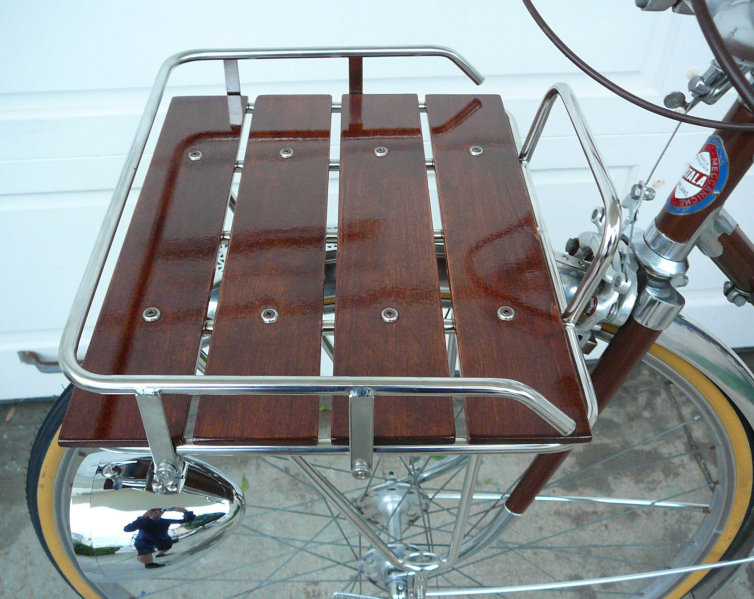
    Chris makes slats for VO Porteur racks. They really look nice. He also has a lovely old Atala.


    We get a lot of e-mails from folks saying they really like the Porteur Rack, probably more than about any other product. I wonder if we should also make a bigger version?

    02 May, 2011

    Folding Kayaks


    We went kayaking yesterday in our folding kayaks. What does this have to do with bikes? Nothing except that I've notice that people who use, and travel with, folding kayaks are a lot like bike tourists, and many do both.  And I though at least a few readers might like to know about them.

    We've owned two folding kayaks for about 15 years. And in that time we've used them in British Colombia, the San Juan Islands, Lake Powell, along the Maine coast, in Nova Scotia, in the Florida Everglades, and in dozens of other lovely spots. Some times we camp, carrying all our gear. Other times we stay at inns and take day trips. And because the kayaks fold into a few neat canvas bags, we check them as airline baggage and transport them in a rental car. Once on the beach the wooden frame and canvas/hypalon skin can be assembled in about 15 minutes.

    Sea kayak touring has a lot in common with bike touring. You move along at a moderate pace with minimal of effort and enjoy the scenery. You can carry more than you would on a bike. And, so long as you are careful of weather and surf landings (avoid them) it's very safe.

    The brand of kayaks I like are Kleppers, which are made in Germany and known for their ruggedness and quality. They are the choice of many expeditions to remote regions. At least one has sailed across the Atlantic; yes, they can be rigged with small sails. They are also used by many military "commando teams", assembled on the deck of a submarine and paddled in under cover of darkness. There are several other good brands that are less expensive, lighter, and maybe a better choice for casual use. I've used and liked Feathercraft, Folboat, and Pouch folding kayaks. The French Nautiraid kayaks also have an excellent reputation.


    Sadly, Sunday was probably our last paddle in the Kleppers. Our son wants a sit-on-top kayak for fishing and snorkeling and one that's small enough that he can wheel it down to the launch point a few blocks from our house (using a kayak cart). And with VO taking so much time we don't use the Kleppers often. So we decided to sell them and get smaller roto-molded plastic boats. When he is older I hope he wants a folder.

    Next post will be about bike stuff. But meanwhile do any readers sea kayak?

    29 April, 2011

    The No-Rivet Leather Saddle

     We were chatting with our saddle manufacturer a couple of years ago about alternate methods of attaching saddle tops. And I was just thinking aloud about the possibility of a replaceable top and a way to have a top that didn't have rivets sticking up. I'd more-or-less forgotten the conversation when we received the saddle above. It uses machine screws and washers to attach the leather top to the frame, otherwise it's a VO Model 3.

    I'm putting this prototype on my bike to see how well it works and lasts. It would be more expensive to make saddles this way, mostly from welding threaded bosses to the frame to accept the screws. And they are a little heavier. On the other hand, the top could be easily replaced and there are no rivets that stick up. If we made a titanium-framed version it might be truly great, and truly expensive. Wadda you think?

    28 April, 2011

    On Fenders and Perceived Quality and the Blog

    Regarding fender installation, we still get a lot of questions about this and will soon have a video that should help. One of the most common errors in assembly that we see is folks putting the cup shaped washer on the eyelet draw bolt upside down, which allows the fender to rattle. This applies to Honjo and to VO fenders. Here is a photo of how everything fits together; notice that the bolt-head with the hole fits inside the cup:


    As we get new production runs of fenders we are switching to two eyelet bolts per stay (except on the narrowest models since they won't fit). This is being done for a rather odd reason. Honjo fenders use two eyelets because they occasionally crack at the eyelet with only one. VO fenders have never had this problem, but so many customers equate two eyelets with better quality that we are adding a second. For what it's worth, if a fender cracks it's almost always at the seat stay or at the fork crown and usually because there is some built in tension.

    This reminds me of those little diamond-shaped reinforcements plates you see at the seat stay bridge on some bikes. No one here has ever seen a seat stay bridge fail on a well-built frame, except for one that had those little plates (the brazer probably cooked the joint). Maybe they were needed for some super thin tubing or some frame builders added them for looks. Now many cyclist seem to think they are a hallmark of a quality frame. Perceived quality.

    On another subject, The comments on the VO blog are surprisingly civil, at least compared to a few other blogs I read. We do very occasionally reject comments for the following reasons:
    • Obvious spam or less obvious spam, like linking to another store or blog without it adding value to the conversation.
    • General rude tone in a comment.
    • Repeating an answer or explanation that has already been posted in another comment. It's simply polite to read the existing comments before posting so future readers won't have to read the same thing over-and-over.
    • Containing information or advice that I know to be totally wrong or dangerous, doesn't happen often.
    Overall, though, I'm really pleased with how nice most folks who reads this blog seem to be. I also wanted to mention that I meet, or at least have e-mail correspondence, with some really neat individuals who read the blog. I'm always surprised when I find out that a writer or entrepreneur or artist who's work I admire reads my ramblings.