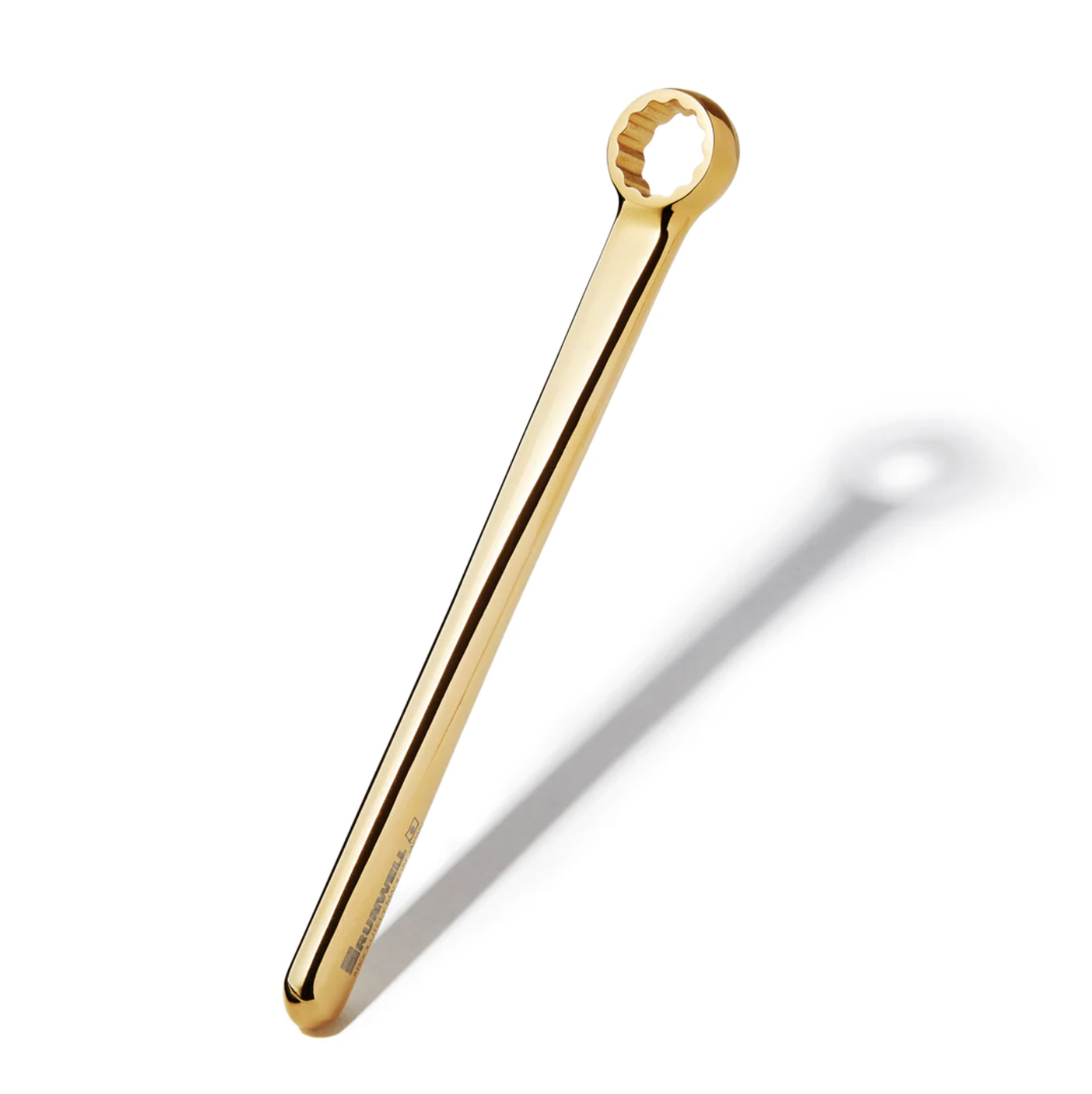
We're all a bit geeky when it comes to tools here. A lot of us have worked in shops and have a variety of tools in our own tool boxes that are not the box standard tool box entries.
26 August, 2022
Six Must-Haves for Your Home Shop
Posted by
VeloOrange
at
1:44:00 PM
0
comments
19 August, 2022
What Makes a Good Rando Bike?
by Scott
![]() |
| Keith Barr Randonneur |
Some say that the best bike for the job is the one you have. And for many things, I think they're right. You don't need something fancy for commuting for example. A mid 80's mtb is a great starting point for a commuter that is tough and ready to hit the urban streets. For other cycle-born adventures, something a bit more specialized is sometimes required for the task. Take for example a bike for randonneuring. What is randonneuring you ask? Well, check out my post about it here for a detailed discussion. But to sum it up, randonneuring is an "organized ride of a distance equal to or greater than 200 km (125 miles) along a set route with a series of check points (controls) along the way. Time limits exist for the rides."
![]() |
| Photo courtesy of Chasing Mailboxes |
The basic touchstone that I've always worked from for a rando bike is that the bike must be comfortable, efficient, and reliable. Going back to that blog post, a key aspect of brevets is self-sufficiency. You need to have a bike that doesn't break down and the parts are robust. And if something does break, can it be repaired roadside or commonly found in a bike shop?
![]() |
| Igor's bike got hit by a car during a lunch stop. Wheel was un-taco'd and fender straightened roadside. |
As far as personal must-haves for a good randonneuring bike: solid and dependable drivetrain, comfortable handlebar and saddle, fittings for fenders, and clearance for wide-ish tires (28mm minimum) is a solid foundation. Hub-powered dynamo lighting, from-saddle accessible luggage, and electronic navigation would be the next step up - but not completely necessary.
Bike fit is absolutely paramount. You want to be comfortable on the bike for hundreds of kilometers. Super aggressive positions are rarely encouraged. An even saddle and handlebar position is a good starting point, with many opting to raise the handlebars a bit higher. We've always encouraged people to leave 5-10mm on top of their threadless steerers for future adjustment when building up their bikes.
![]() |
| My actual brevet bike before hanging up my reflective vest |
Does it have room for fenders? While it may not be a necessity if you live in Southern California, brevets are held rain or shine and 200km (the shortest distance) is a long way to go with a wet bum. If you have room for fenders, I'd always suggest installing them, for peace of mind and protection against that rain storm or errant puddle splash that is sure to happen if you don't have them fitted.
![]() |
| Build list here |
Does the bike have sufficient clearance for a reasonable size tire? Again, take a look at what you have installed already on the bike. If your bike has something between 28-35 mm (for 700C tired bike) you're probably in good stead for staying comfortable on a brevet. If your bike has 25mm, check and see if there is room to put wider tires into it. Can you ride a brevet with 25mm tires? Yes, but it can be uncomfortable for some, particularly those of us over 40, whose hands and backs are more "sensitive" to bumps and such. For 650b, it seems like 38-42mm is the sweet spot for quality tires.
When we were designing the Pass Hunter and Polyvalent, all these questions came to mind. We wanted to have frames that had sufficient clearance and fender and rack fittings for different setups. I think a Pass Hunter with a set of cable actuated disc brakes, a solid 10 or 11 speed set up with a compact double crank would be all I'd need to get through a full set of brevets this year and for many more years to come.
There is a huge variety of randonneur bike styles, so by no means is this comprehensive, just my opinions from years of riding brevets. Some people ride electronic drivetrains and time trial bikes, others ride super traditional setups with big, boxy bags. Someone even rode PBP (Paris-Brest-Paris) on a scooter back in 2015. It really comes down to what works for you and what you're comfortable with!
What is your favorite randonneuring bike? What makes it so special to you? Let us know in the comments and share it with the wider world.
Posted by
VeloOrange
at
12:37:00 PM
10
comments
12 August, 2022
Microshift Advent Super Short X Neutrino Mini Velo - Ride Review
by Igor
We usually recommend Shimano Zee or Sram road 1x derailleurs for Neutrinos, but those derailleurs and accompanying components can be hard to find reliably nowadays. So when I saw Microshift launch their new Advent Super Short groupset, I was thrilled. We ordered a group, mounted it on a Neutrino and started doing some testing.
Some background on the Neutrino drivetrain: because of the smaller wheel, you'll want a more compact (shorter) derailleur that ideally has a clutch. Basically something that has good range and good chain retention. The Shimano Zee (downhill components mostly) was really the only game in town for a while. But with supply chain interruptions it was very difficult to find Zee stuff.
![]() |
| 10sp Shimano Zee |
We've also run Sram Rival and Force 1x rear derailleurs, but they are a bit longer since they are designed for full-size wheels. There isn't really a worry about them touching the tire when fully extended, but if you bump/bend your derailleur hanger, clearances are reduced. For the record, I've been running my Neutrino with a Rival rear derailleur and an 11-32 cassette for a long time without issue. For a much more in depth article about Neutrino drivetrains and setups, check out our Neutrino Tips and Tricks post!
![]() |
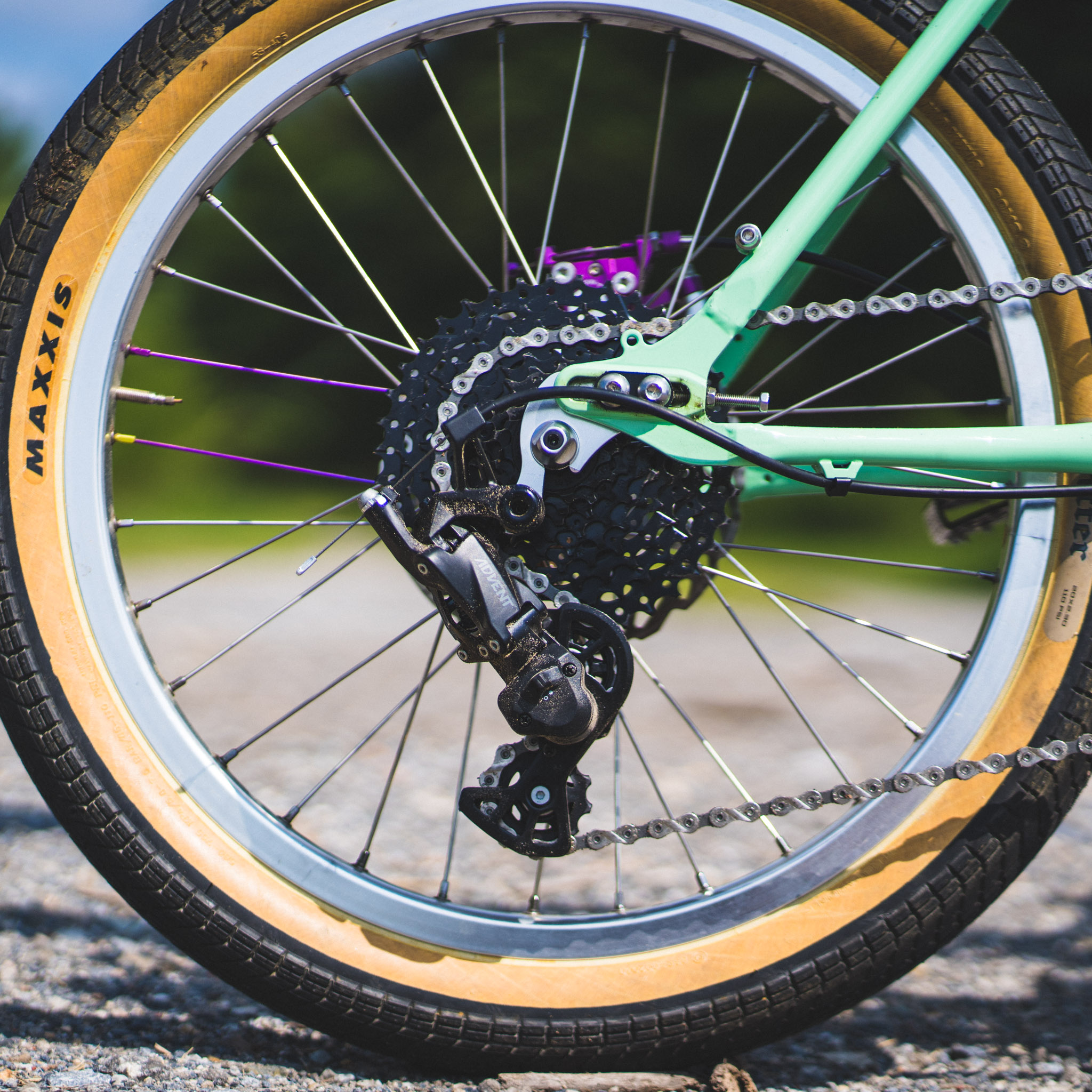
| The chain is close, but it clears fine. |
Enter the Microshift Advent Super Short groupset. This group was originally designed for some of the new kids and smaller-sized mountain bikes that use 20-24" wheels. The idea is that you don't need enormous 10-52t cassettes for smaller wheels, the simpler 9 speed system is more affordable and easier to maintain, all the while having some really good performance for off-road activities. Honestly, it's kind of perfect for the Neutrino.
Fully extended, the longer upper cage design solves the problem of the aforementioned Sram rear derailleurs. The bottom of the cage is miles away from the tire and there is ample room between the tire and chain above the chainstay. There is also a clutch you can turn on and off by way of a switch. I just leave it on because I didn't notice any difference in shifting with the clutch disengaged and you never know when you want to get rad.
The cassette range of 11-38t is generous. Smaller wheels naturally have a lower gear ratio, so you never really run out of gear on the lower end. The cassette is a little on the heavy side, but everything shifts very consistently and without any drama on the lowest end. Sometimes the big gear jumps on 9 speed super wide range cassettes aren't the smoothest, but no problem on this one.
The indexed flat bar shifter is simple with a thumb button for getting into an easier gear and a trigger for harder gears. There is a little rubber pad which makes for a nice grip when shifting.
All-in-all I've been very pleased with the group's performance! It's easy to use, shifts great, and has a perfect range. If you've been thinking about this group for your Neutrino, you won't be disappointed.
Furthermore, we were talking about this group's application, and we think it would make for a really good way to do a 1x conversion on a full-sized wheel bike.
You can find the complete build list for this bike right here, and a link to this group here.
Posted by
VeloOrange
at
11:02:00 AM
9
comments
01 August, 2022
Growtac Reviews and Sale Items
By Scott
We've had a great response to the Growtac Brakes that we introduced to the US market in April. We've been overwhelmed by the kind words folks have sent after getting their brakes, installing them, and realizing their actual power and braking abilities out on the trail. Additionally, the diversity of colors we offer has really livened up people's bikes and allowed for a lot of customers to brake out (see what I did there) of just plain black brakes for their bike.
We've also had lots of folks test out the brakes and publish their findings. The great people at Outpost Richmond wrote about the brakes here. Russ Rocca did a video comparison of the Growtac brakes vs the Paul Klampers vs the Yokozuna brakes here. And last, but not least, Bike Rumor did a review of the brakes on their site here. Some great comments there and all unsolicited from us.
We've also being sorting through products here at VO HQ and we have added some more items to our Specials Page. We have some Diamond Polyvalent frames there, plus we have 26" Snakeskin and Stainless Steel Fenders, Randonneur Handlebars, Noir Porteur Bars and Diamond Handlebar tape. So take a look and see if something there tickles your fancy.
Posted by
VeloOrange
at
12:21:00 PM
2
comments
20 July, 2022
Quiver Killers Don't Exist. Change my mind.
Editorial by Scott
There is a term in the outdoor world - the Quiver Killer. The term refers to a bike, ski, or a kayak (and so on) that can do so many different things that it does away with the need for multiple bikes/skis/kayaks, and all you need is THIS ONE. "The one bike to rule them all" is often the sub headline or line in the opening paragraph describing the product. Well, I'll call folks out on that one. I don't really think one bike can do it all. Why - it has to compromise on something. Let's look at it from a couple perspectives.
A Polyvalent with generous clearances, mounts to carry stuff, and stouter tubing for reliability does really well as a tourer or commuting bike. But ultimately as a super go-fast roadie, trying to keep up with the fast kids on their carbon bikes? Not so much. To ride a heavier steel touring bike at that speed requires too much power to keep up with them for an extended period of time, at least for most riders.
I think people look at the idea of a quiver killer as a way to save money, to justify buying that one bike that will do everything, but the reality is that any bike, kayak, or ski that claims to do everything is ultimately a compromise in some way. To make a frame work as a touring bike, there are design aspects that have to be taken into account. And many of those aspects are not the same if we wanted to design a, for example, mountain bike. There are core elements of both styles that don't overlap in a bicycle categories Venn diagram.
Now if you're the type of rider that focuses on only one type of riding, let's say credit card touring, you could ostensibly have one bike like a Pass Hunter. It could be built up with some zippy components and be ridden on the road stripped down, gravel with some moderate knobby tires, and for a few overnights with some rackless bags!
I know some folks will say, "but you work in the bike biz, so it's all good and well for you to tell us to buy more bikes." What I'm saying is that if you want a bike to go mountain biking on, don't kid yourself and buy a flat bar road bike and think you can go ride rough, rugged mountain bike trails on it. Once you get past a smooth stretch of single track and onto a trail with rocks and roots, you'll be pining for the travel of a hardtail or tire volume of an ATB. Likewise, buying that older "race" bike that someone on Craigslist put up for sale and then trying to put racks and fenders on it, may be an exercise in frustration due to the limitations of the frame and its set up.
I'd love for there to be a quiver killer, but in reality, one bike that purports to do everything will do only some styles of riding well. Do you agree or disagree? Let us know in the comments and we'll see how folks feel about it.
Posted by
VeloOrange
at
2:41:00 PM
31
comments
01 July, 2022
Finding Peace in Achill, Ireland
by Igor
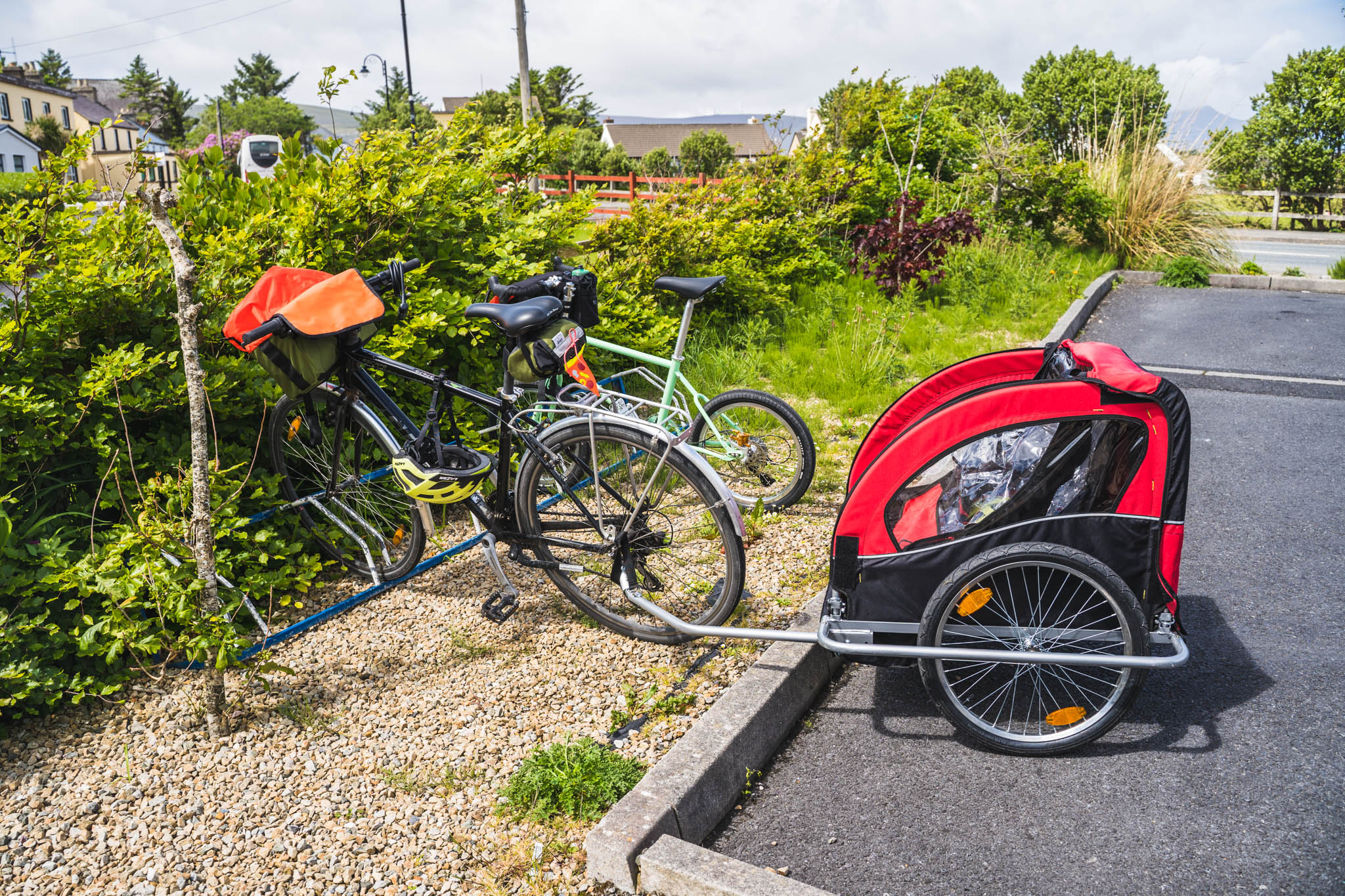
44km of completely off-road riding was right at the doorstep of our hotel. With Adrian on her Neutrino, and me on a rented Giant hybrid (with only 2 working gears - the salty and damp atmosphere does wonders to bikes) towing the kiddo, we set off.
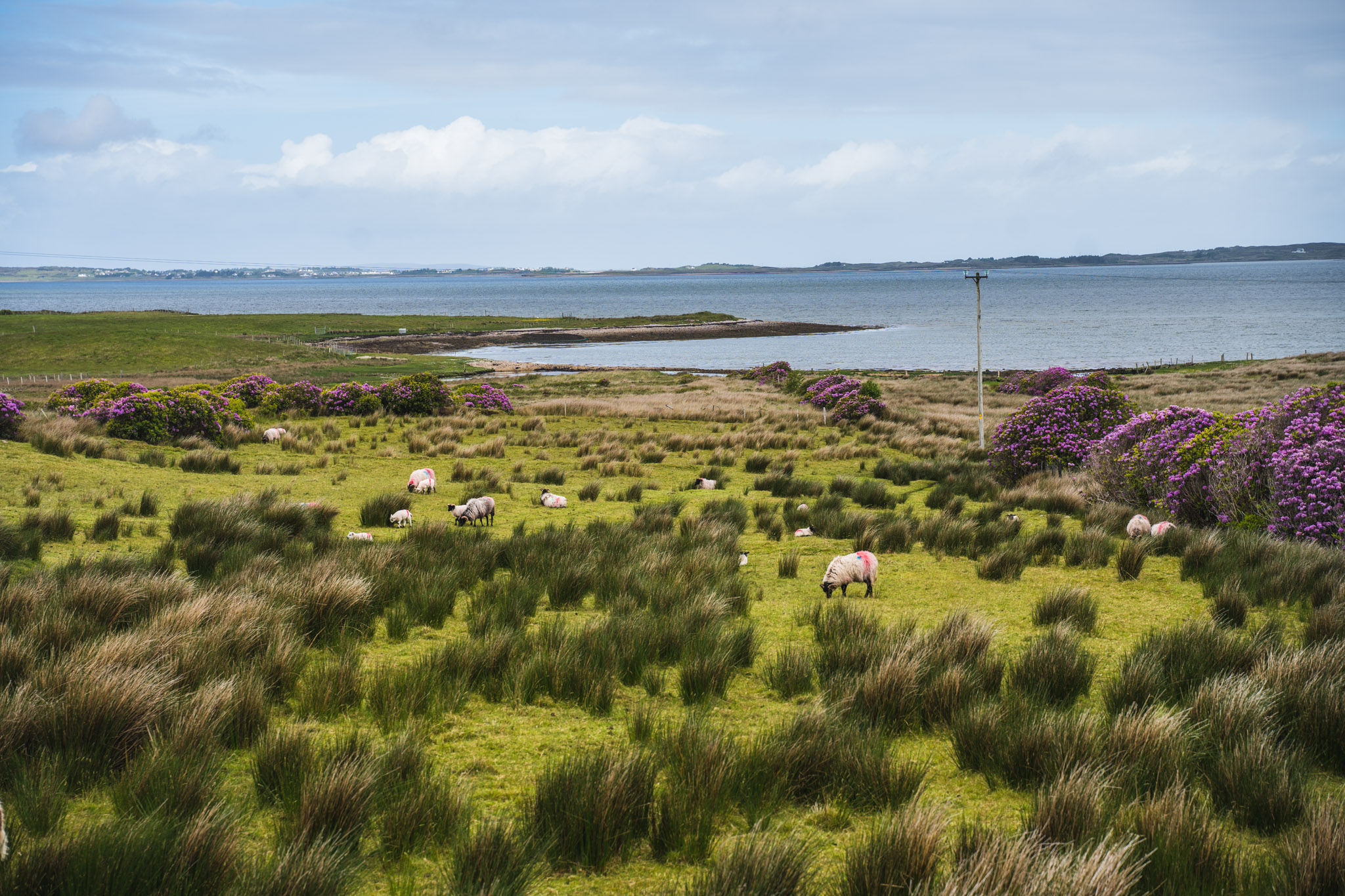
And with that rain, the landscape is lush, green, and vibrant. We took our trip during the flowering of the Rhododendron bushes that line the scenery and segmented maze of stone walls and fences that (mostly) keep in sheep and livestock. We also got used to making way for families of brightly marked sheep roaming the countryside.
The trail is easily navigated with directional signs at intersections and the terrain is crushed gravel. You could absolutely ride the trail with a skinny tired road bike, but leave your deep-section wheels at home or you’ll be steering a sailboat with the constant wind - only the lucky ones get to have headwinds both ways.
We love off-road trails. Rail trails, gravel, canal paths, you name it. If it’s offroad, we’re down. After years of road riding and touring, we’re pretty much through with sharing roads with cars. I don’t want to go too in depth into the problems we have today with distracted and/or drunk drivers but it is becoming increasingly evident that separating cyclists with even a curb is the way to go. Sharrows aren’t enough. Bucolic countryside trails far from even the sound of cars are ideal.
While we weren’t shredding the gnar, shralping, braapping, or enduring a sufferfest, we did have a chance to clear our heads, travel, and enjoy the ride. Sometimes the most memorable rides are the ones where you are enjoying the ride for the places you visit, relationships you grow, and the unique experiences shared.
No matter how you ride, you’re awesome. But do take time for the chill rides - those are an important part of your journey.
Quick note: VO will be closed Monday, July 4th in observance of Independence Day and re-open on Tuesday, July 5th.
Posted by
VeloOrange
at
10:53:00 AM
1 comments
01 June, 2022
Installing Freehub Bodies on VO Hubs
by Scott
One of the great things about VO Hubs is their tool-free disassembly. This gives you the ability to swap out the freehub bodies, replace a driveside spoke, or remove the cassette for travel all without the use of any cassette tools - a key feature of convenience and roadside serviceability on our hubs for years. How easy is it to do it? We'll use this short blog post to illustrate how easy it is.
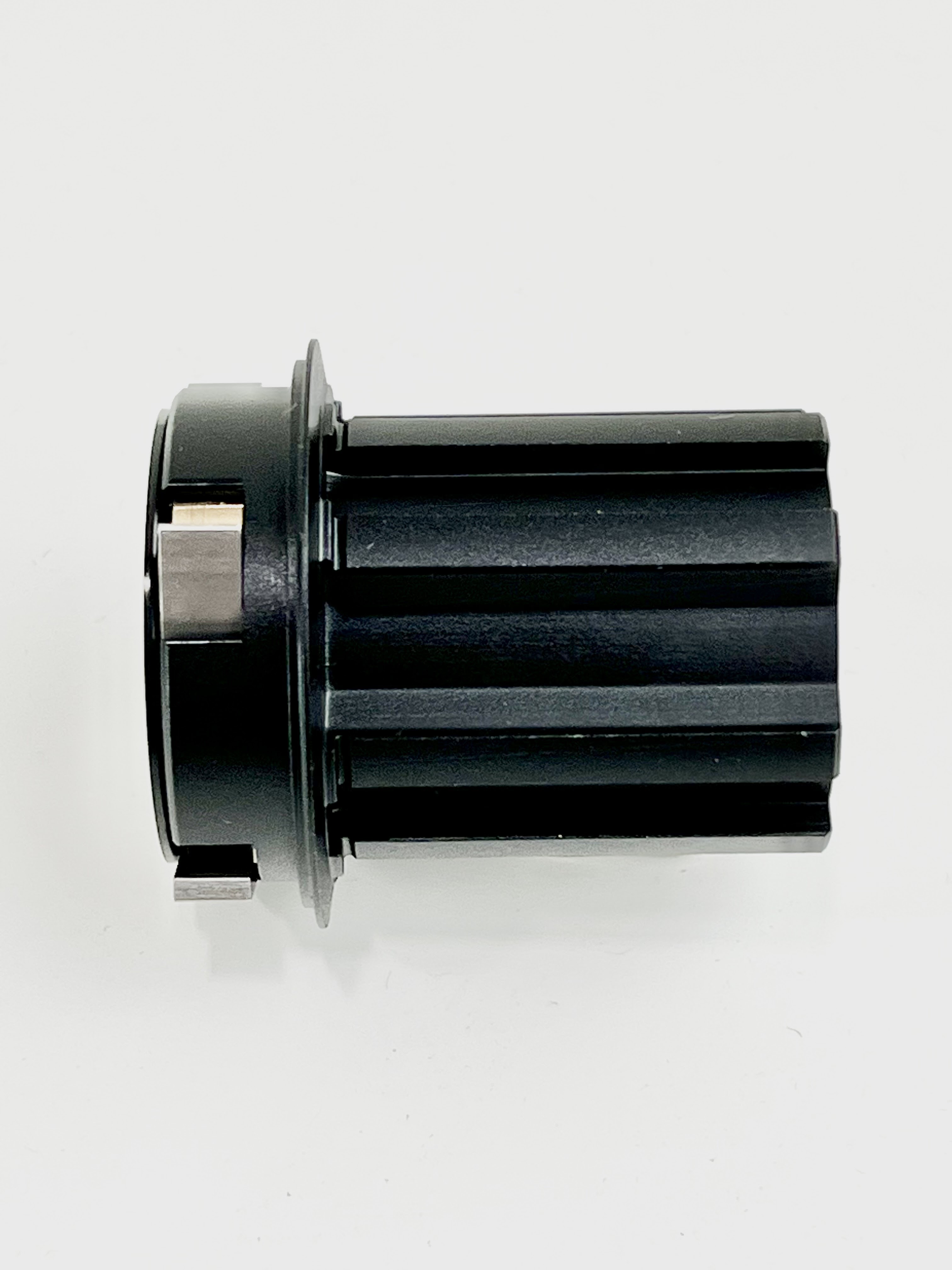
The first step is figuring out what you are starting with. The stock freehub body that comes on our current-generation disc rear and cassette rear hubs is the HG11 spline for Shimano/SRAM 8-11spd. If you want to run something other than an 11 speed cassette, you'll need one of these spacers to allow for a 8/9/10 speed cassette to sit properly on the freehub body. We'll next look at the two other freehub options for you to change to:
Campy - This freehub allows you to use any 9/10/11 speed Campagnolo cassette on it. Campy did not change the overall spacing of their cassettes over the years like Shimano did, so you can use a variety of speeds on it without the use of an adaptor spacer.
SRAM XDR- This freehub body is designed by SRAM to allow use of a 10 tooth cog in the smallest position on the cassette. Taking up the same width as a Shimano HG11 freehub, it allows XD and XDR cassettes to be used on our hubs built into wheels designed for road spacing.
Now that we've established what we have and what we want to change to, lets get going on changing the freehub body. We're going to show how to switch out to the SRAM XDR to show how and when to use the spacer described above.
Start by removing the installed freehub body- Grab onto the freehub body or cassette and pull it outward. Clean off any excess grease to enable a solid grasp. The dust seals may be tight, but it will come off.
Freehub on
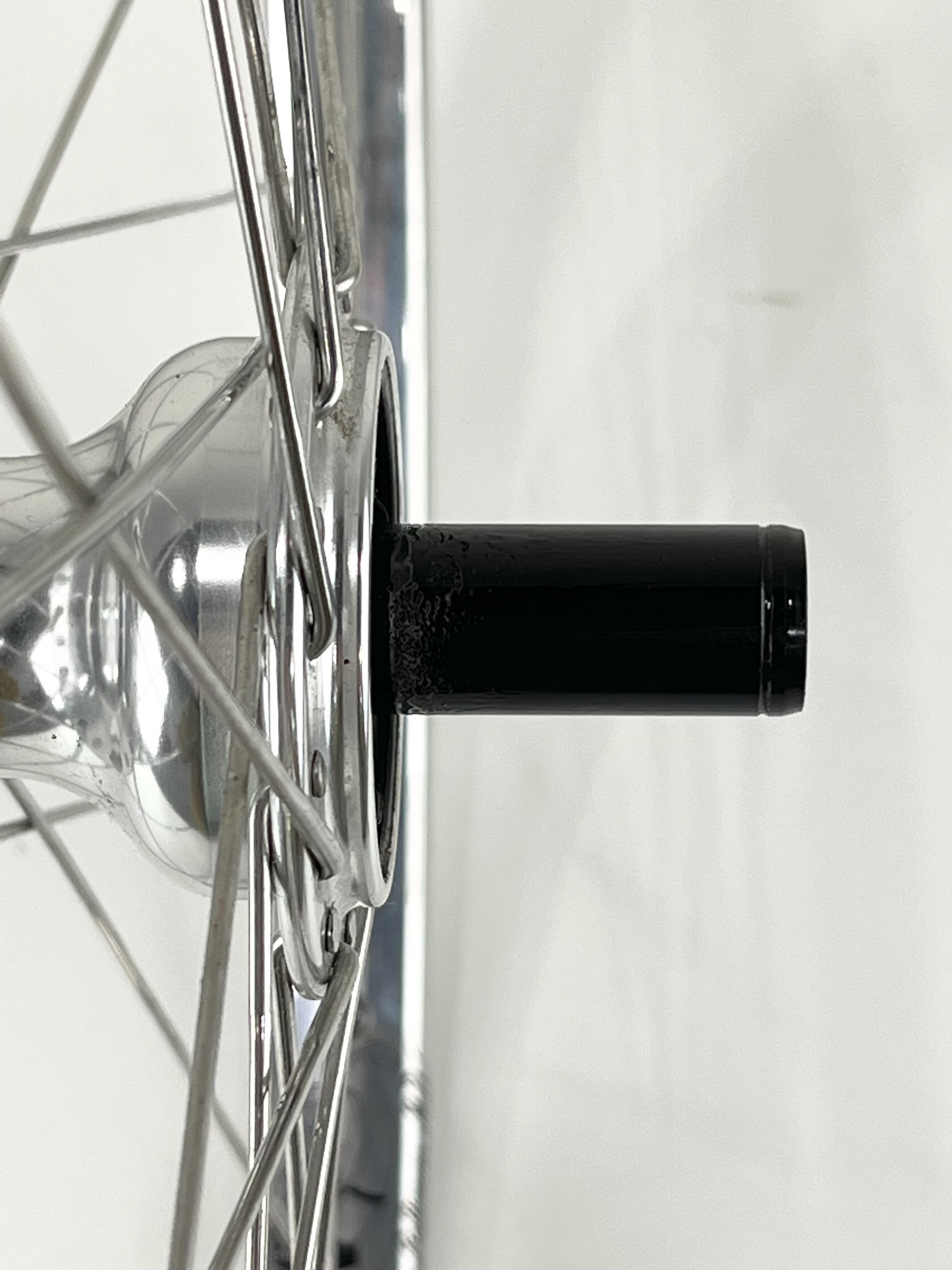
Freehub off (the axle does not come out)
Be sure to take this time to inspect your bearings (if you're making this switch after a period of use). Also be sure to remove the freehub barrel that fits around the axle and rests in the back side of the freehub body. These barrels are specific to the freehubs, and you'll want to be sure you use the correct one.
When the freehub body comes off, don't let those endcaps wander off.
Barrel inside freehub bodyBarrel removed from freehub body
Now install the new freehub body - Remove your new freehub from the packaging. You'll notice that the freehub comes with a plastic retainer ring around the pawls. You will need to remove this ring before installing the freehub.
Ring installed from factory - You'll need to remove the ring
Ring removed
After removing the ring, put a little bit of light oil or grease on the pawls. Slide the new freehub body's barrel into the freehub body. Then slide the new freehub body assembly on to the axle (rotating helps the pawls to click into place), and slide on the silver super thin washer onto the outside of the freehub body. Finish up by popping the end cap on top of the washer and you are good to go!
There you have it - quick and hassle-free freehub replacement, and if you run into any trouble, don't hesitate to reach out at info@velo-orange.com.
Posted by
VeloOrange
at
2:14:00 PM
0
comments


.jpeg)


.jpg)